Doucai Cup - Chicken

Doucai Technique
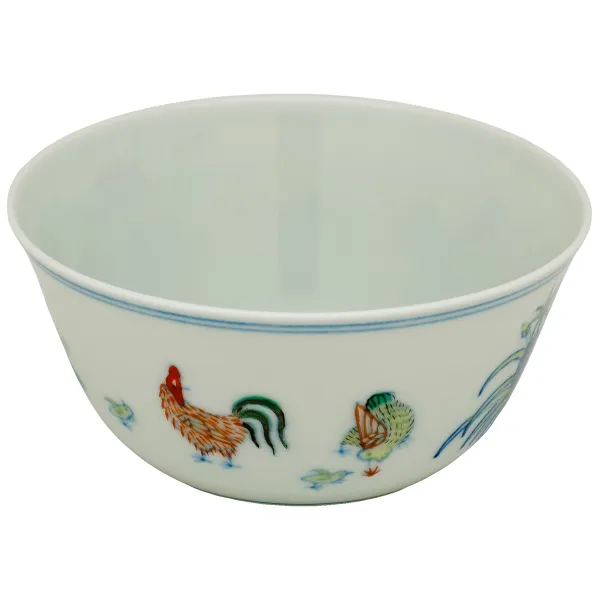
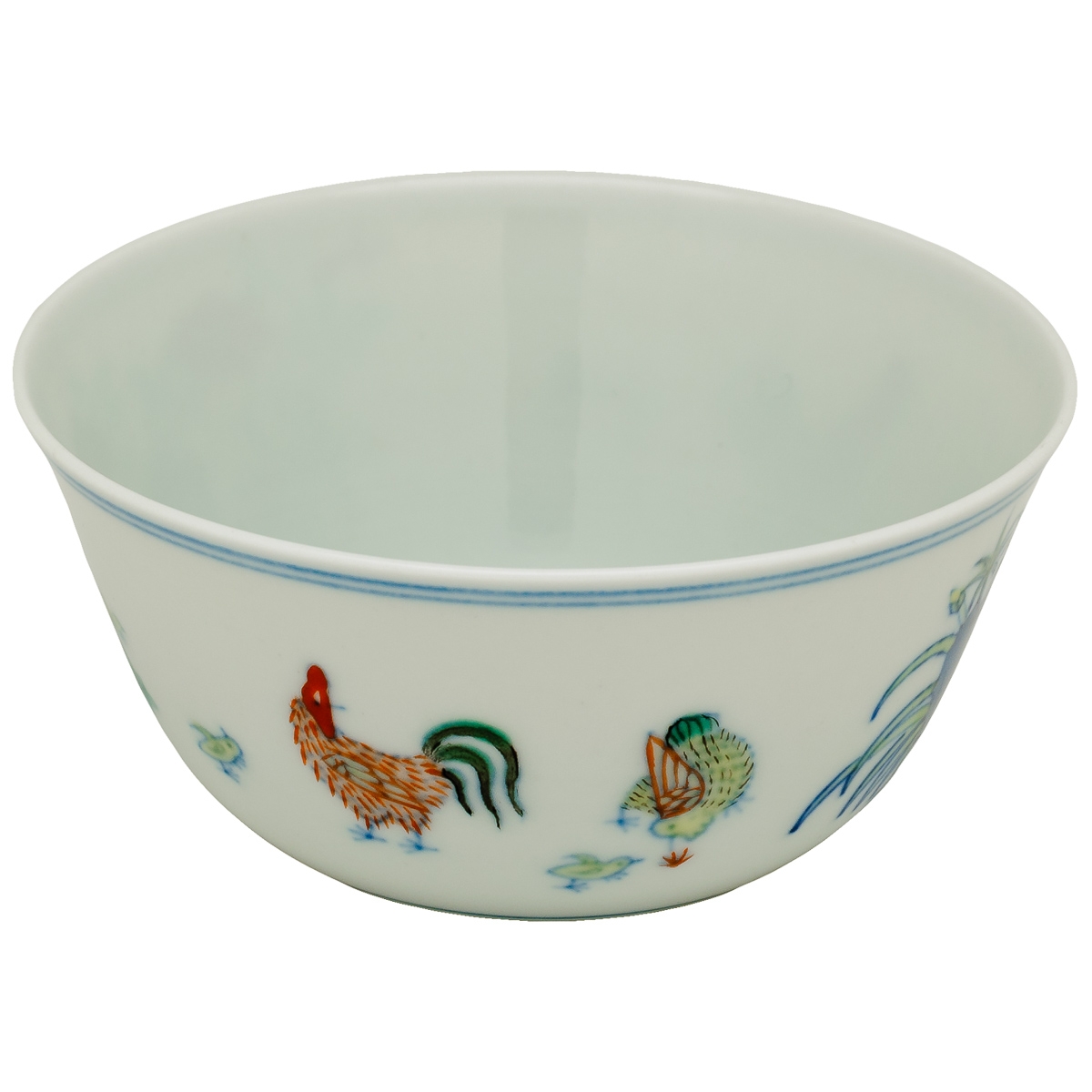
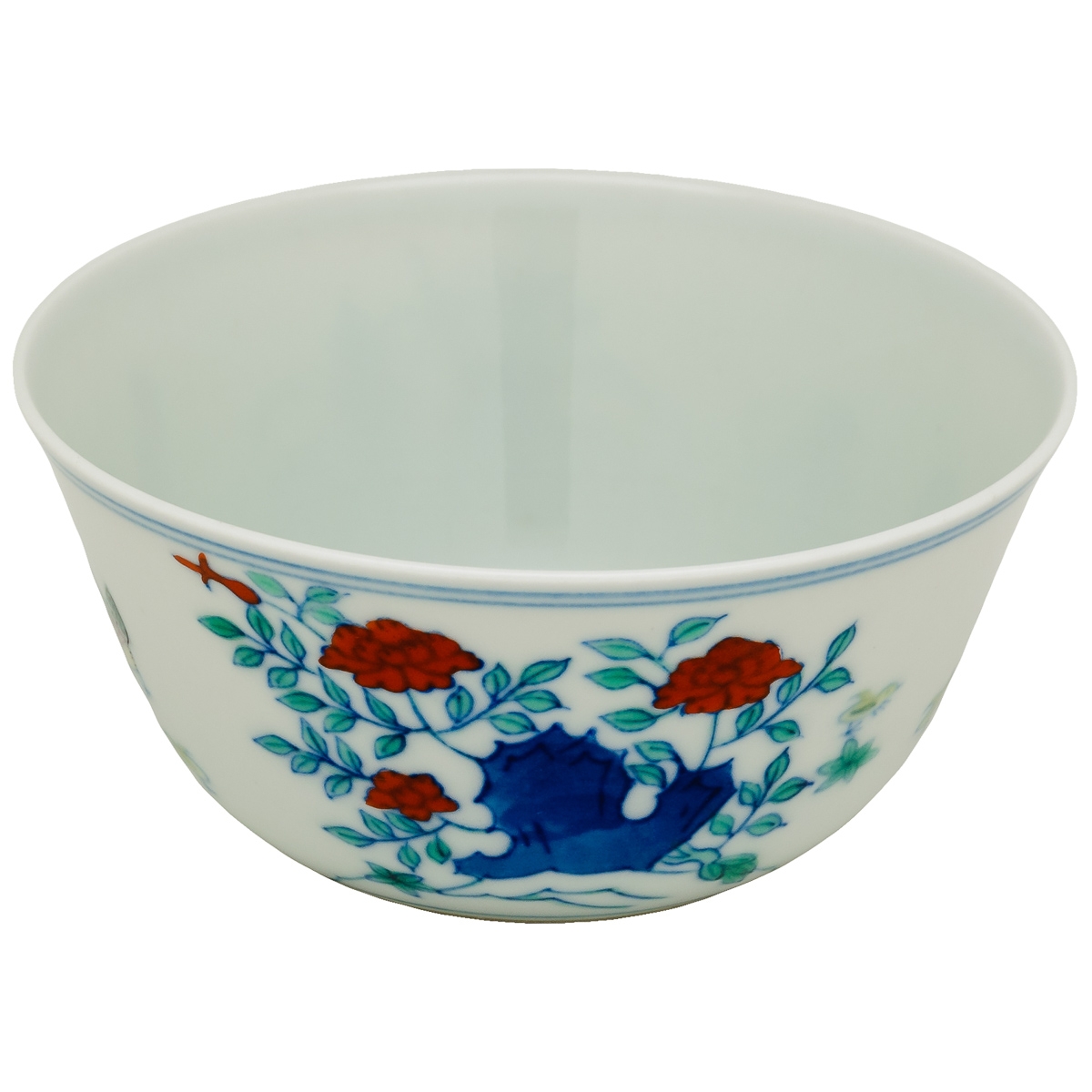
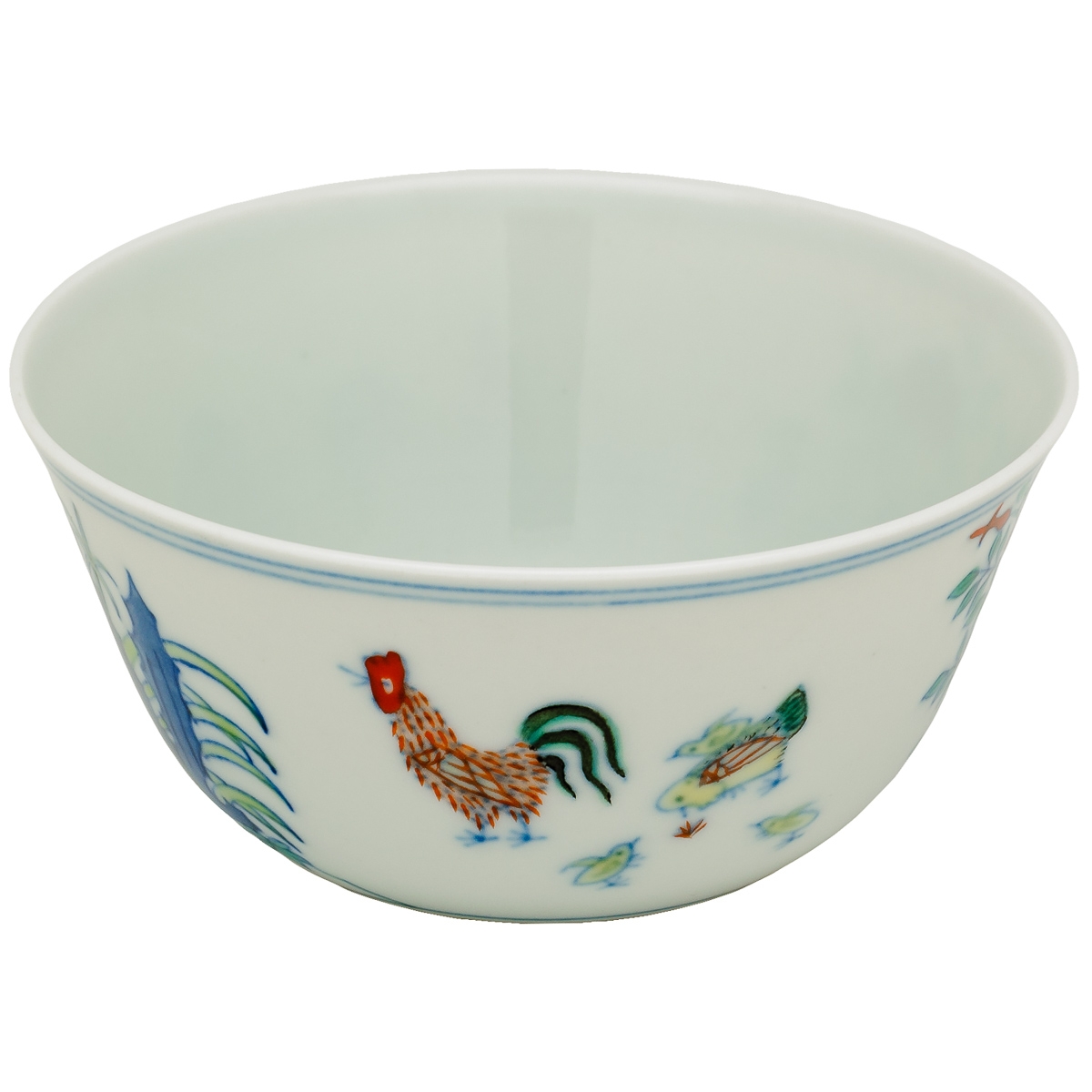
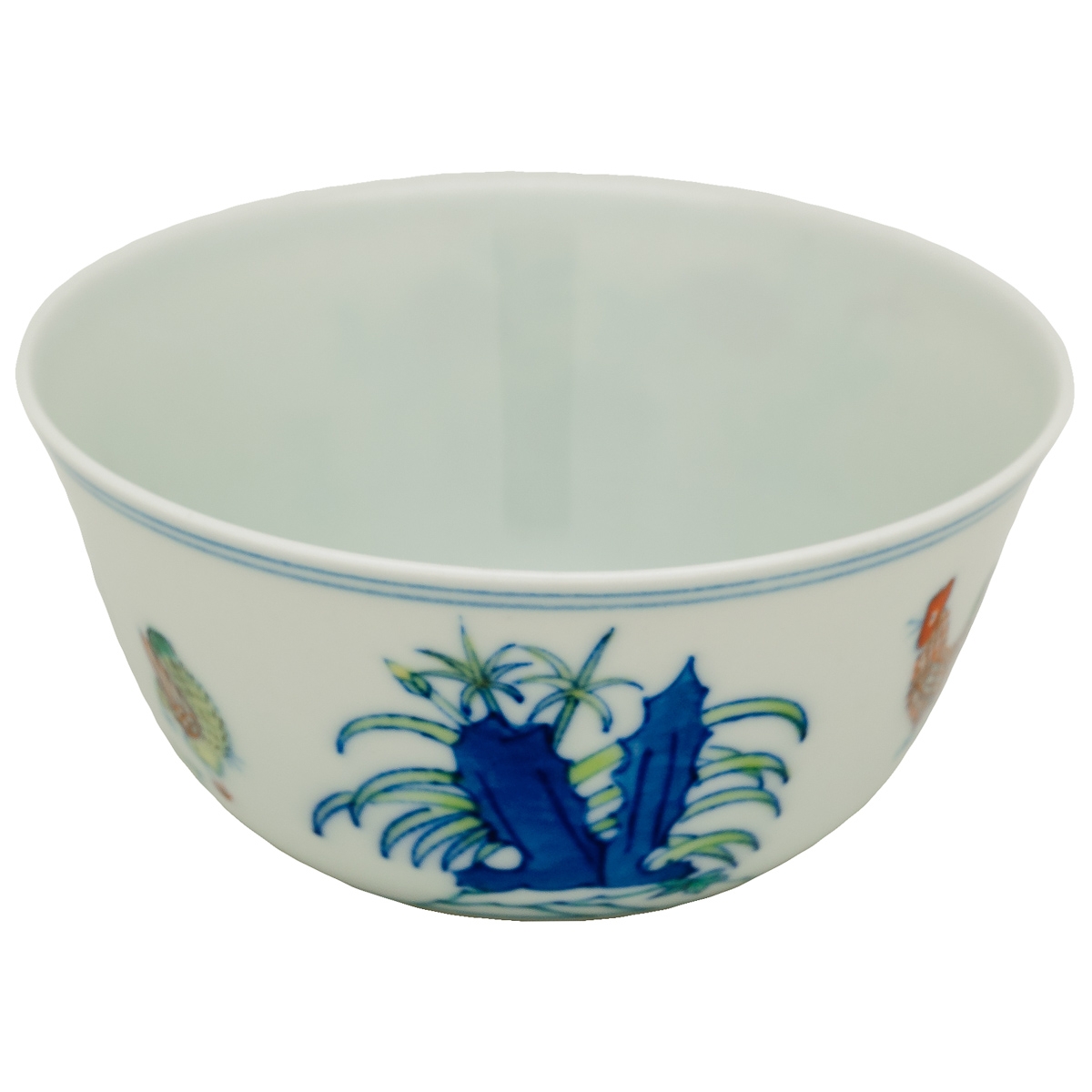
It employs the Doucai (contrasting colors) technique – the outlines of the designare first painted in underglaze blue on the porcelain body, thenfired at high temperature. After that, enamels in red, yellow, green, and other colours are filled in over the glaze, followed by a second firing at a lower temperature. The underglaze blue and overglaze enamels complement each other, creating a soft and elegant tonal effect.
Design
Doucai Ji Gang Bei
"Gang"(vat/jar) refers to the vessel form. The cup is shaped like a miniature water vat, with a flared mouth and a belly that gradually tapers downward.
"Ji"(chicken) refers to the decoration. The cup is painted with a scene of a hen and rooster leading chicks in search of food, surrounded by peonies, garden rocks, and orchids. The image is lively and warm, symbolising family harmony and abundant offspring.
The Chinese character for "chicken" (ji) is a homophone for"auspiciousness" (ji). Moreover, the first year of the Chenghua reign was the Year of the Rooster, so the cup may also have been made as a commemorative piece.
Already priceless in the late Ming, genuine Chenghua examples are extremely rare (fewerthan 20 known). In 2014, one sold at Sotheby's Hong Kong for HKD 281 million (about USD 37 million), setting a record and cementing its iconic status.
This piece is a modern reproduction crafted in the style of the Chenghua Doucai Chicken Cup. It is made using traditional Doucai techniques and is intended for tea drinking and decorative display only. It is not an antique original and holds no collectible or investment value. The base bears a replica mark reading “Made in the Chenghua Reign of the Great Ming”.
| Material | porcelain |
|---|---|
| Volume | 60 ml |
| Diameter Ø | 8,5 cm |
| Height | 4,5 cm |